
-
Date:
15 Oct 2026
-
Location:
Room 2.2.14 - Faculty of Sciences of the University of Lisbon & Online
-
Schedule:
16h00 (Lisbon time), 15h00 (Azores time)
-
Lecturer or Responsible:
Bernardo Rocha
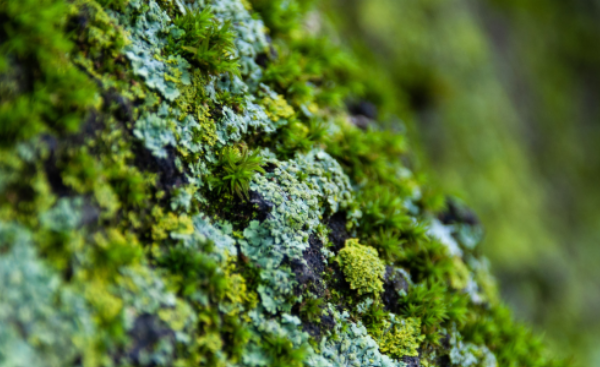
As climate change increasingly threatens ecosystems worldwide, biodiversity-based ecological indicators are urgently needed to track its impacts at the global scale. Despite their potential, lichen diversity remains underused due to three major knowledge gaps: i) disentangling climate from other environmental pressures, ii) application across extreme environments, and iii) space-for-time validation. First, across complex environmental gradients in European cities, we modelled lichen taxonomic and trait-based metrics using non-linear machine learning methods, disentangling climatic effects from other drivers and identifying ecological thresholds. Second, in maritime Antarctic, we demonstrated that lichen diversity can track climate effects under extreme conditions, while highlighting the importance of accounting for biotic interactions with plants and bryophytes. Finally, using 17 years of lichen monitoring data, we validated spatial predictions over time, supporting the space-for-time assumption, but revealing caveats related to trait selection and ecological time lags. Overall, our findings support integrating lichens into international monitoring frameworks as robust indicators of environmental change.
Online access* • LINK
*To access the meeting in the app without using the link, use the meeting ID 335 232 708 144 999 2 and acess code Vf7ai7nP

Bernardo Reis Rocha (Urban Ecology)