

The native forest of the Azores remains a symbol of biodiversity resilience, according to an international study carried out over more than 20 years by researchers from CE3C (Centre for Ecology, Evolution and Environmental Change) at the Faculty of Sciences of the University of Lisbon and the University of the Azores. The study shows that arthropod communities (a group of small animals that includes insects and even crustaceans) in the Azores’ native forests have fared better than expected – whilst nevertheless highlighting the need to continue and strengthen the conservation of soil species in pristine forests.
The conclusions reached are based on samples and data collected between 1999 and 2023 at 30 standardised sites, spread across 15 fragments of native forest on seven islands in the Azores. For this study, 30,000 observations relating to 405 species of arthropods were analysed, 91 of which are endemic to the Azores.
The study examined both soil arthropod communities – sampled using pitfall traps – and communities whose habitat is above ground, in trees (sampled by tapping the respective tree canopies).

Against a global backdrop in which the decline of insects and other arthropods has given rise to serious scientific and public concern, the findings from the Azores offer an important perspective: not all insect communities follow a uniform trajectory of collapse, particularly where native habitats remain protected.
The study reveals significant temporal variability, with around 28 per cent of species showing significant declines, 17 per cent increasing in numbers, and more than half (55 per cent) remaining stable.
Despite this glimmer of hope, the authors warn that the situation should not be interpreted as indicating an absence of risk. Some species of major conservation importance continue to show worrying signs, and seven rare endemic species have not been rediscovered during more than 20 years of sampling and are considered likely to be extinct – in other words, significant threats to the island’s biodiversity remain.
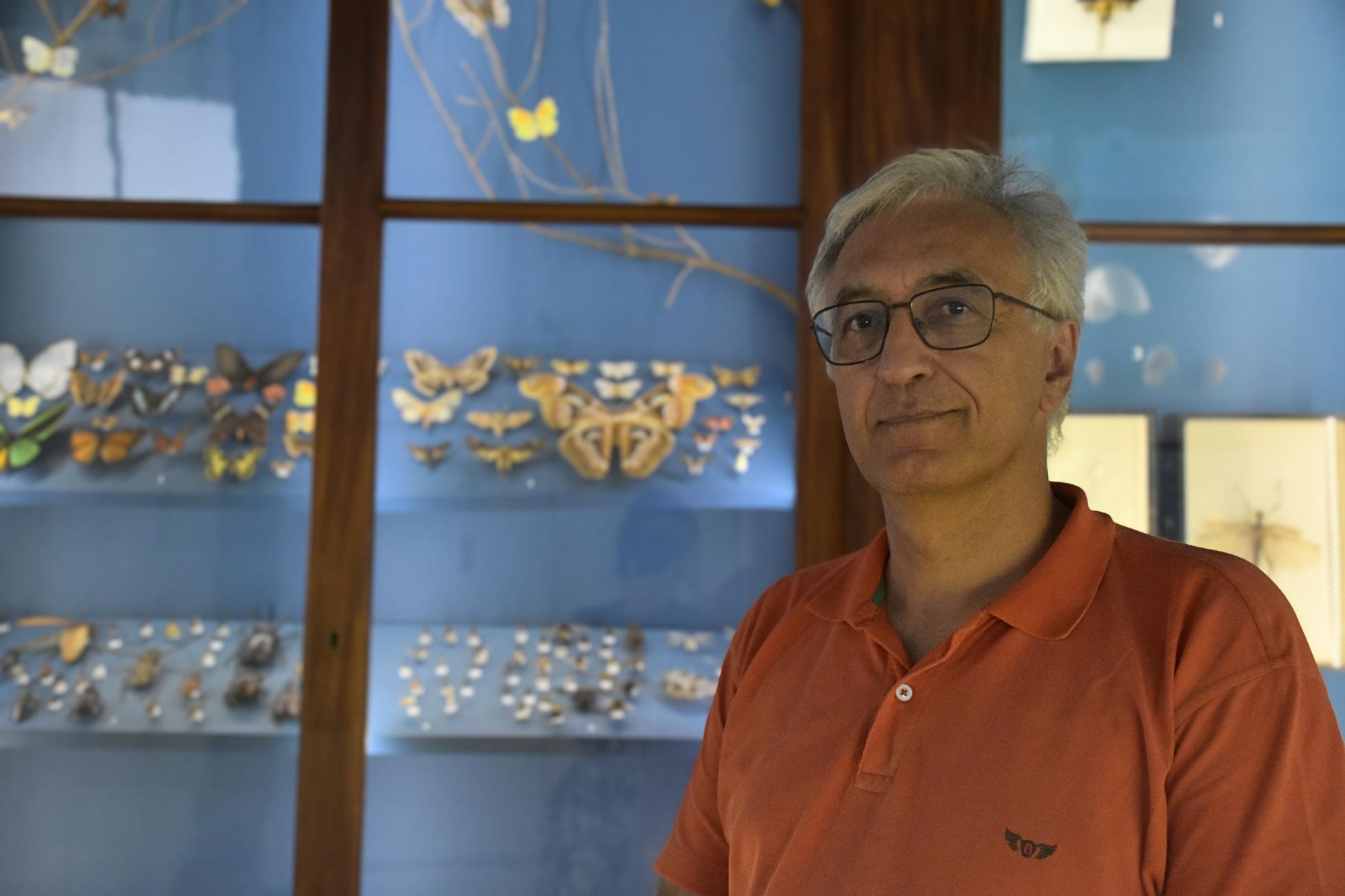
This wide-ranging and ambitious study was led by the University of the Azores in collaboration with other international institutions. Among the authors is Paulo Borges, a researcher at CE3C based at the University of the Azores and coordinator of the BALA project, which supports this work.
This study brings together more than 25 years of fieldwork, laboratory research, taxonomic identification and international scientific collaboration. The key message is that protecting native forests works, but it is not enough: we need to maintain long-term monitoring and take targeted action to protect the most vulnerable species and habitats".
Paulo Borges
The stability observed in the Azores’ native forests may be linked to legal protection and the conservation efforts undertaken over recent decades – which is good news. But the overall message is clear: the Azores’ native forest remains a vital refuge for the archipelago’s unique biodiversity, but its future depends on active protection, continuous monitoring and long-term scientific investment.
Related News
view all 45 s
Estudo internacional identifica a via molecular Dilp8-Lgr3 como elemento central na regulação da ovulação espontânea em Drosophila melanogaster.
20 May 2026

Nova espécie descrita pela doutoranda CE3C Rita Eusébio e pela investigadora Ana Sofia Reboleira.
28 Oct 2025
Estudo divulgado esta semana – assinado pela investigadora cE3c Maria Dias – veio revelar o que aconteceu (e continua a acontecer) em muitas das zonas húmidas mais importantes para aves em todo o mundo.
07 Nov 2022
An international study reveals that butterfly species perceived as the most beautiful receive greater public and scientific attention and are over-represented in some European conservation measures.
21 Sep 2026