
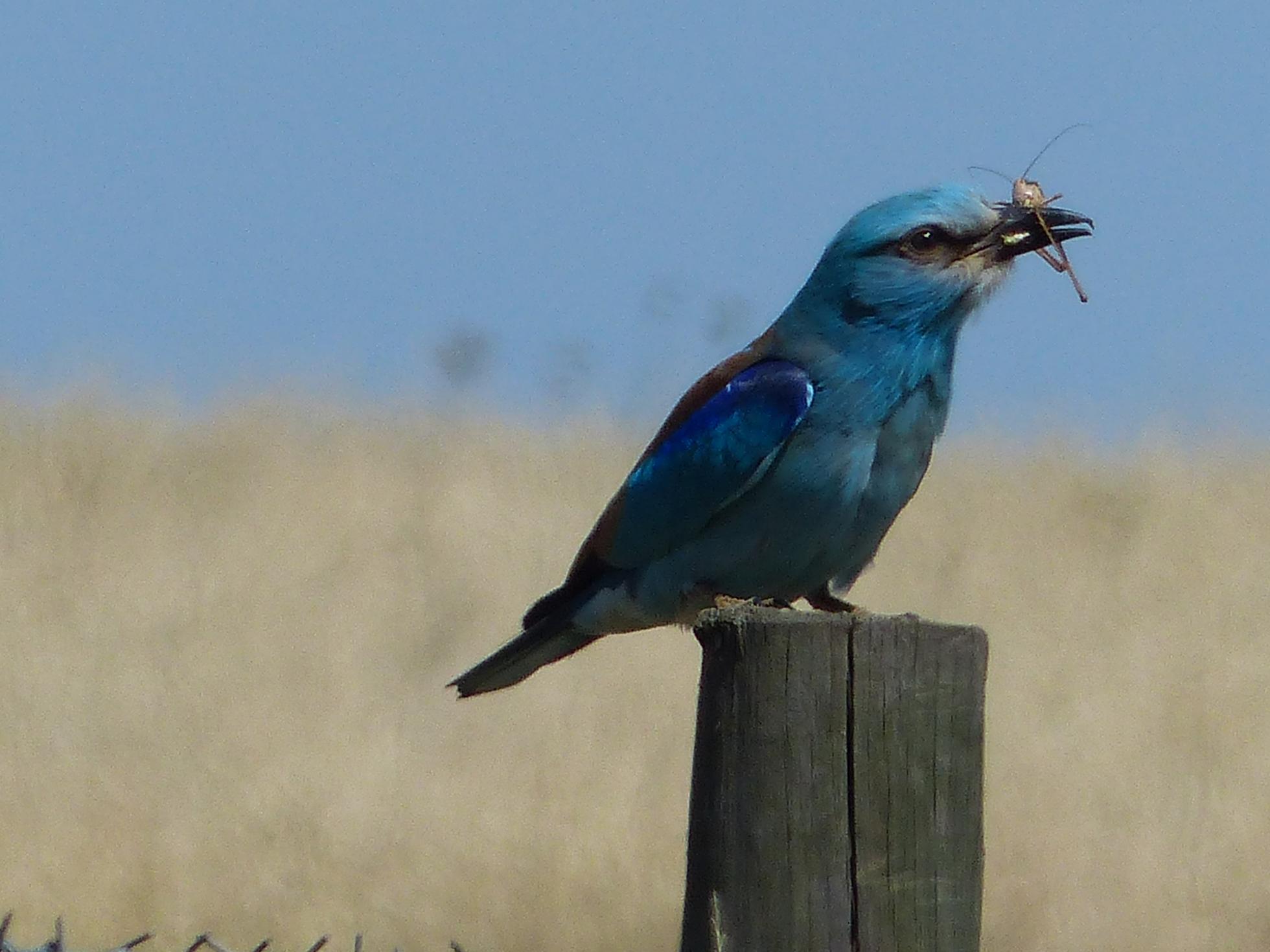
The European roller is recovering in numbers but losing territory. This is the conclusion of a study carried out by a group of Portuguese researchers, notably Teresa Catry, a researcher at CE3C – Centre for Ecology, Evolution and Environmental Change at the Faculty of Sciences, University of Lisbon – which shows that, although the national population of this threatened bird has grown by around 26 per cent since 2009, the stock dove has lost approximately 67 per cent of its breeding range.
Published in the scientific journal Ardeola, the research brings together more than two decades of monitoring of the species in Portugal and constitutes the longest dataset ever compiled on the stock dove in the country. The researchers analysed around 650 nesting attempts, capture and recapture data from over 1,500 ringed birds, and national censuses of the species, enabling them to assess population trends, breeding success and the factors associated with its recovery.
Associated with the open agricultural landscapes of the Alentejo, the European roller (Coracias garrulus) is a migratory steppe bird that depends on suitable habitat for foraging and on cavities for nesting. In Portugal, it is classified as Critically Endangered and its population is currently estimated at between 72 and 82 breeding pairs.
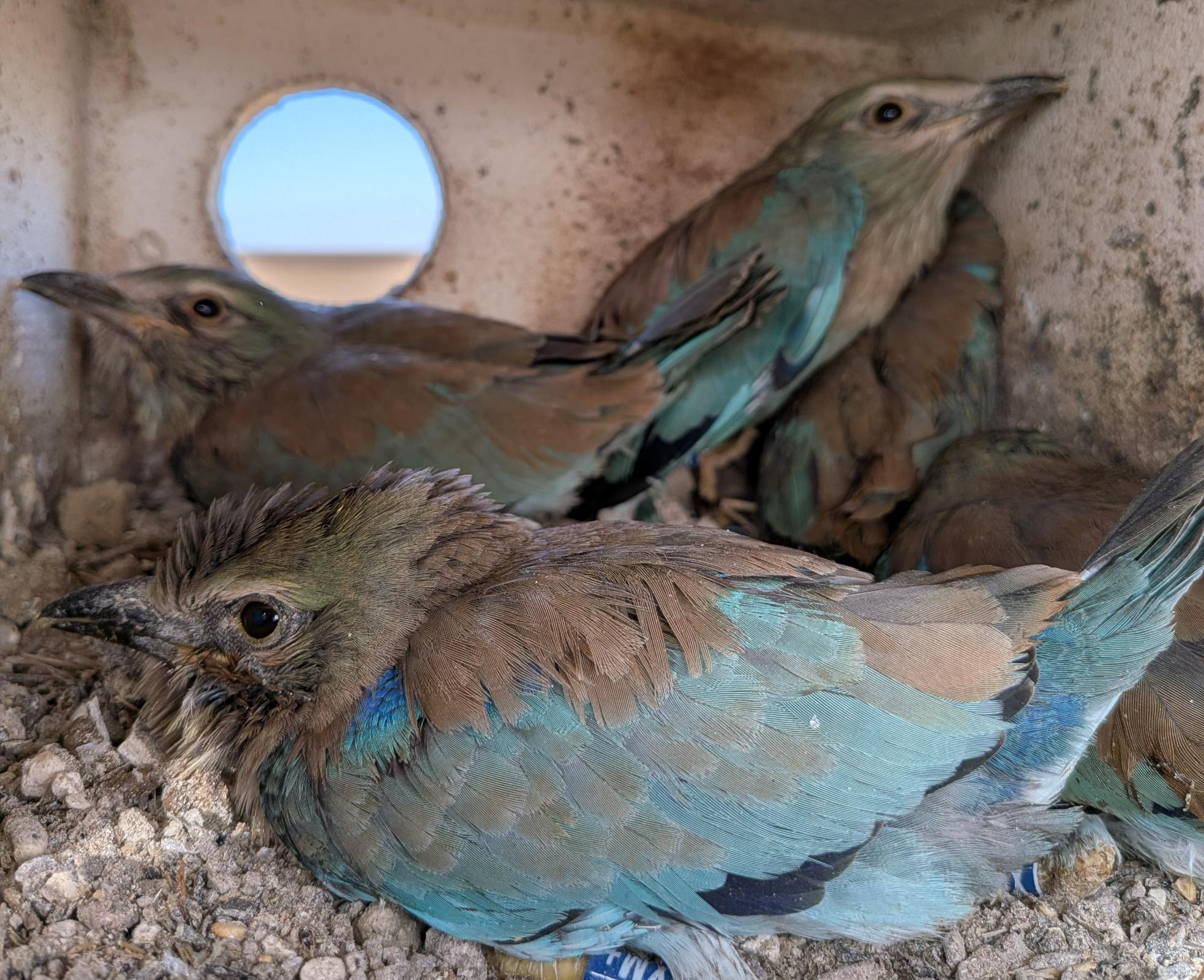
The results show that the species is now heavily concentrated in the Lower Alentejo. According to the study, 96 per cent of the national population breeds in the Castro Verde Special Protection Area, whilst outside this region only three pairs were recorded, located in the São Vicente and Vila Fernando Special Protection Areas.
This concentration reflects the importance of the conservation measures implemented over recent decades. Currently, 81 per cent of the pairs in Castro Verde use artificial nests, installed to compensate for the lack of natural cavities suitable for breeding.
This study shows that consistent conservation measures, maintained over time, can have a very positive impact on the recovery of threatened species. In the case of the Eurasian roller, the installation of artificial nests and habitat management have contributed to the population increase in Castro Verde. However, the results also show that this recovery remains vulnerable, as the species is still highly concentrated in a single region and depends on the continuation of these measures."
Teresa Catry
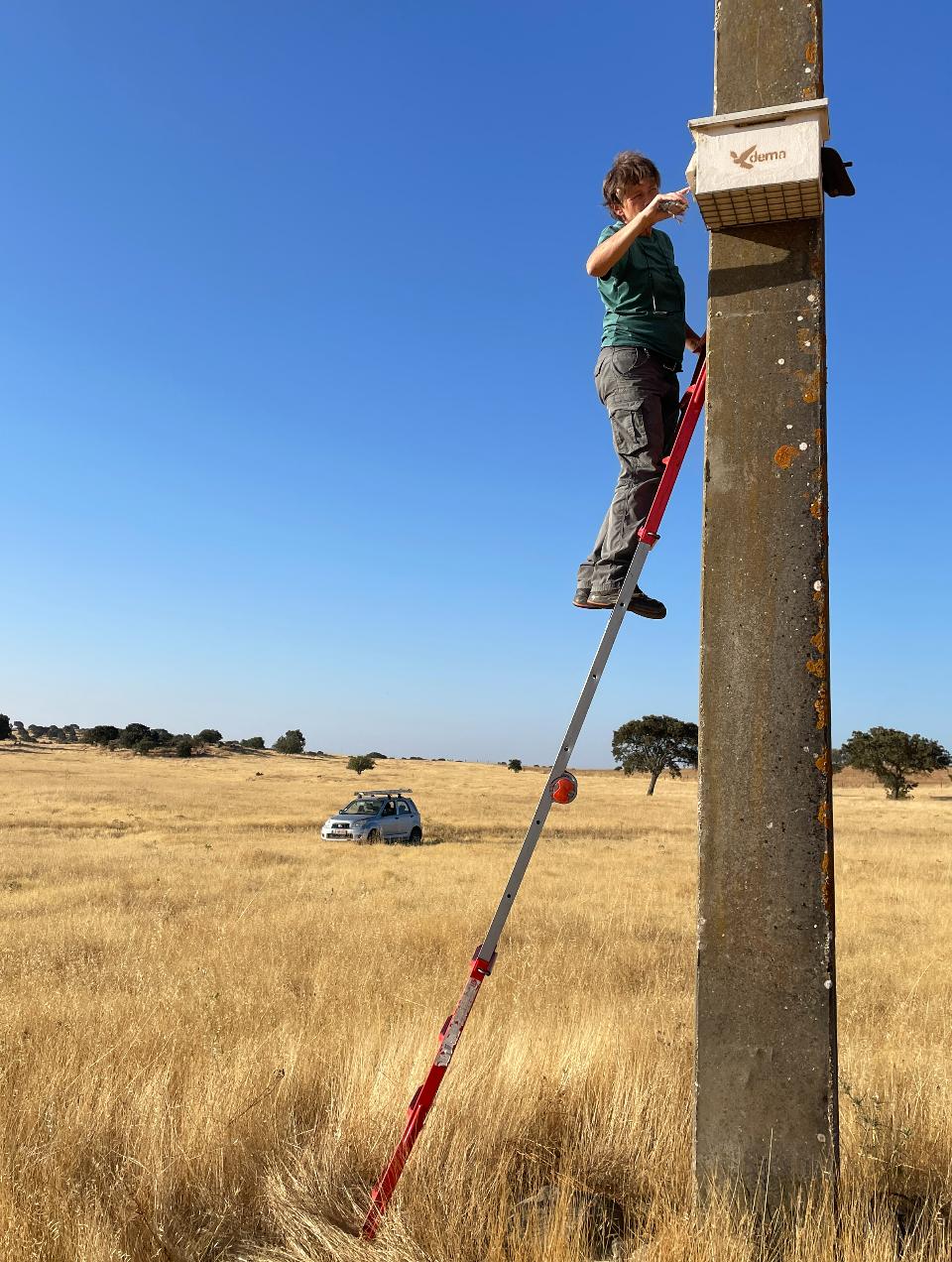
Despite the positive trend in bird numbers, the population’s high geographical concentration increases its vulnerability to local changes in habitat, and the species shows a limited ability to recolonise areas from which it has disappeared.
Their low dispersal capacity helps to explain this difficulty. Researchers found that young birds settle, on average, just 9.7 kilometres from where they were born, whilst adults that change their breeding site do so over an average distance of just 2.5 kilometres.
Although conservation measures have had a positive impact, the species remains vulnerable as it is highly concentrated geographically and heavily dependent on the provision of artificial nests. The challenge now is to maintain the success achieved in Castro Verde and, at the same time, create the conditions for the stock dove to re-establish itself in other parts of the country. Long-term monitoring is essential to assess whether the measures are working and to adjust conservation strategies where necessary".
Teresa Catry
Related News
view all 43 s
Estudo assinado pelos/as investigadores/as CE3C Maria Cristina Duarte, Rui B. Elias e Maria M. Romeiras procura pôr termo a debate com quase 200 anos.
25 Nov 2024

A study published in Scientific Reports (part of the Nature Portfolio) brings good news, but scientists warn of the need to maintain active protection strategies
11 Sep 2026
Portugal na frente de combate ao comércio ilegal de espécies na União Europeia
24 Jan 2024
Nova espécie descrita pela doutoranda CE3C Rita Eusébio e pela investigadora Ana Sofia Reboleira.
28 Oct 2025