
The great diversity of the Rare Plasmid Biosphere
08 May 2025
Location: Room 2.2.14 - Faculty of Sciences of the University of Lisbon & Online
Genomics and Evolutionary Ecology of Microorganisms

27 Nov 2025
Room 2.2.21 - Faculty of Sciences of the University of Lisbon & Online
16h00 (Lisbon time), 15h00 (Azores time)
Bianca Gomes (CE3C-BR)
Online access • LINK
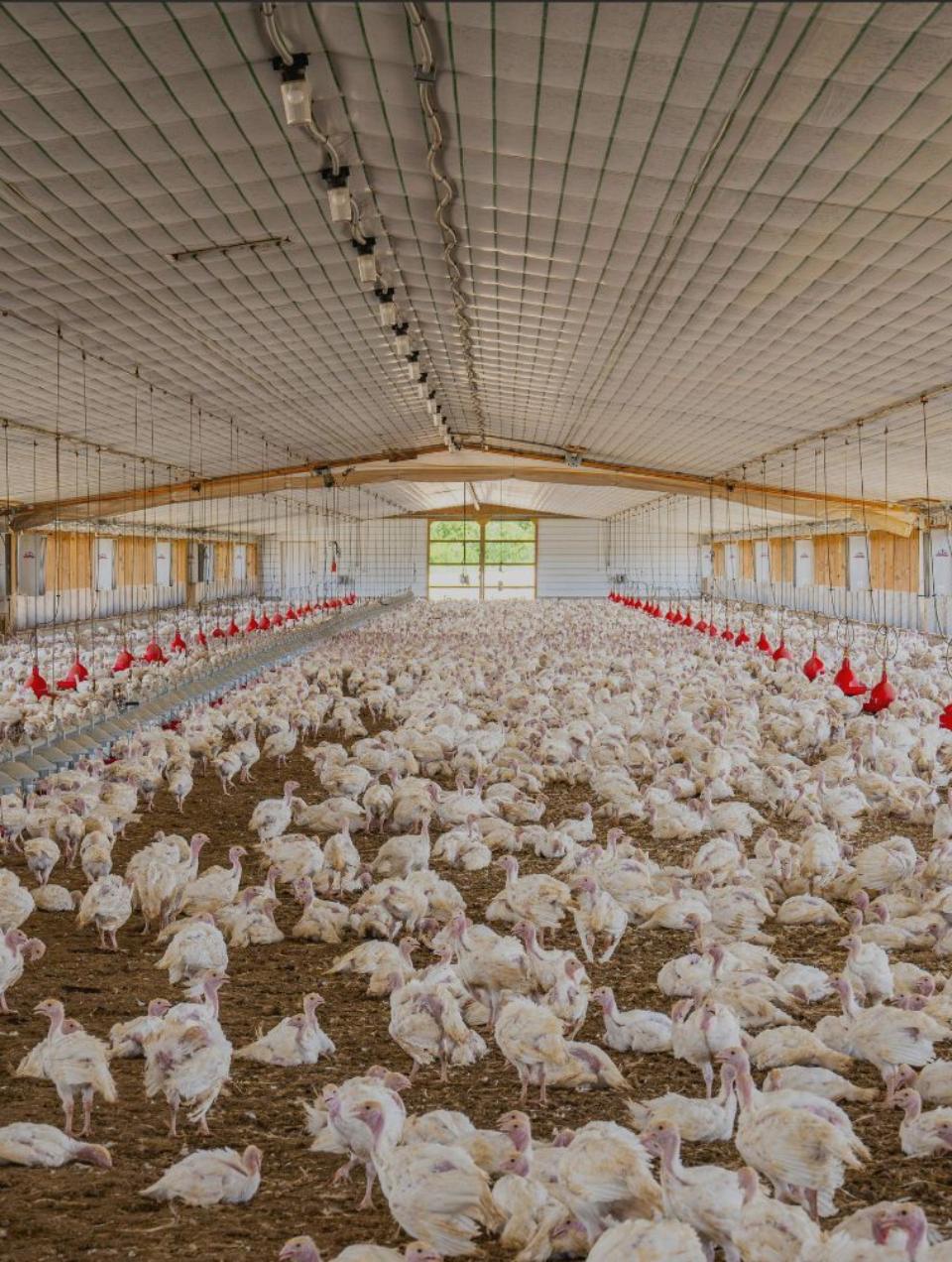
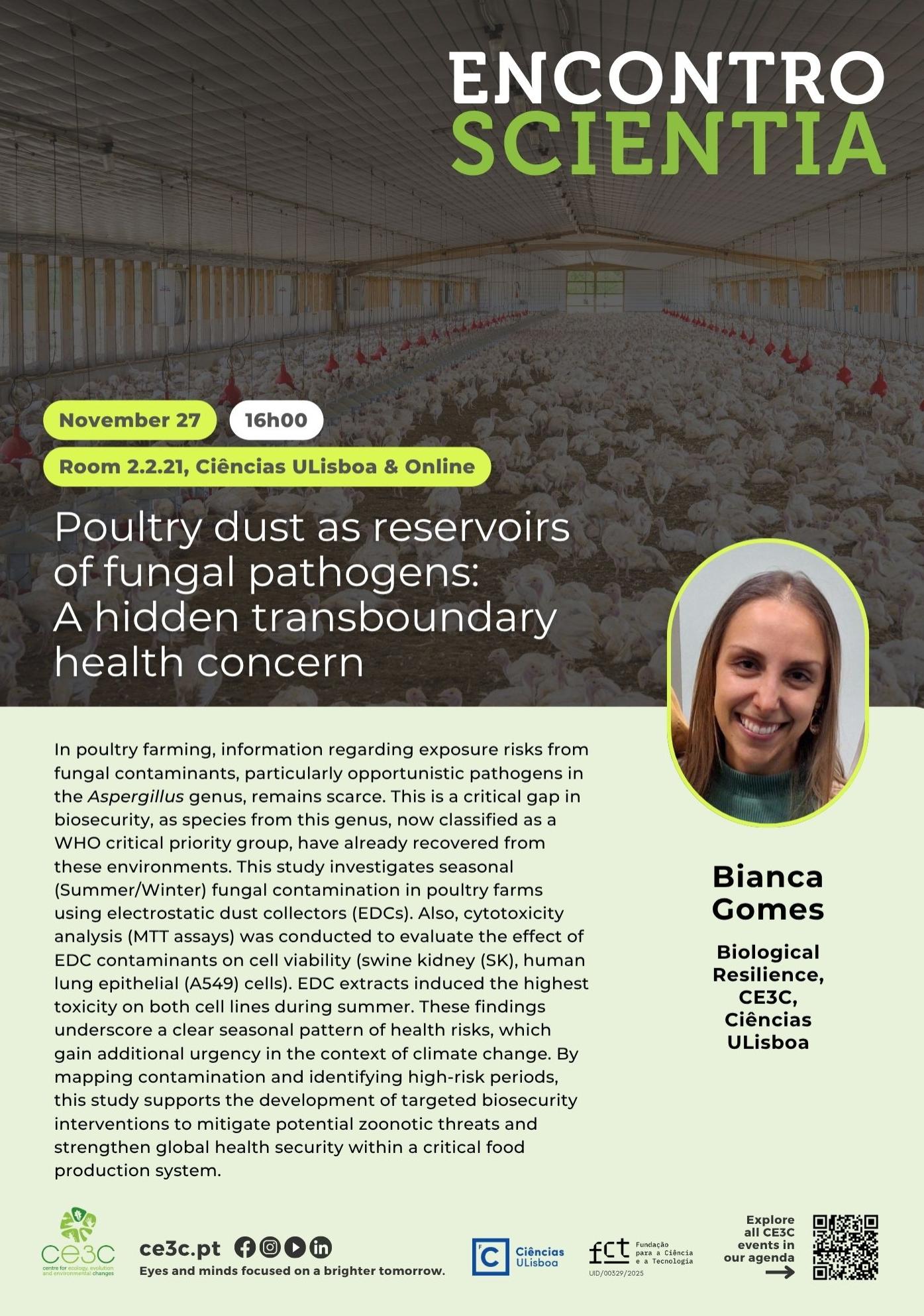
In poultry farming, information regarding exposure risks from fungal contaminants, particularly opportunistic pathogens in the Aspergillus genus, remains scarce. This is a critical gap in biosecurity, as species from this genus, now classified as a WHO critical priority group, have already recovered from these environments. This study investigates seasonal (Summer/Winter) fungal contamination in poultry farms using electrostatic dust collectors (EDCs). Also, cytotoxicity analysis (MTT assays) was conducted to evaluate the effect of EDC contaminants on cell viability (swine kidney (SK), human lung epithelial (A549) cells). EDC extracts induced the highest toxicity on both cell lines during summer. These findings underscore a clear seasonal pattern of health risks, which gain additional urgency in the context of climate change. By mapping contamination and identifying high-risk periods, this study supports the development of targeted biosecurity interventions to mitigate potential zoonotic threats and strengthen global health security within a critial food production system.
Related Events
08 May 2025
Location: Room 2.2.14 - Faculty of Sciences of the University of Lisbon & Online

18 Dec 2025
Location: Online

05 Mar 2026
Location: Room 2.2.14 - Faculty of Sciences of the University of Lisbon & Online