
Terrestrial mammals of Mozambique: current knowledge and future challenges for conservation
25 Jun 2020
Location: Online
Natural History & Systematics

22 Oct 2026
Room 2.4.16 - Faculty of Sciences of the University of Lisbon & Online
16h00 (Lisbon time), 15h00 (Azores time)
Edna Correia
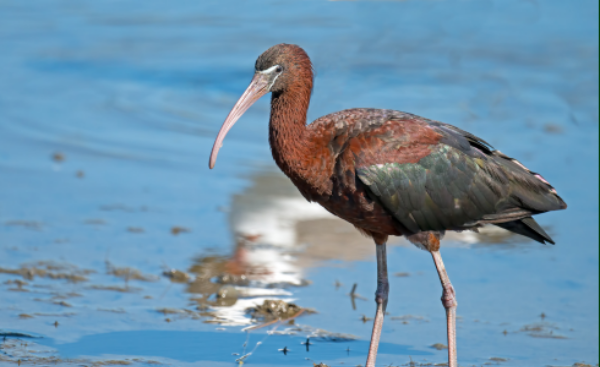
The Glossy Ibis (Plegadis falcinellus) has undergone a remarkable population recovery in southern Europe, recolonising the Iberian Peninsula since the 1990s. However, we still know relatively little about the drivers of this spectacular population expansion and how individuals move across the landscape and use the different habitats. Between 2022 and 2025, we fitted 52 glossy ibises with GPS devices in the lower Tagus river basin, Portugal. Tracking data reveal connectivity among wetlands across Portugal, Spain and Morocco, highlighting the importance of key river basins and marshes for this expanding population. Within the Tagus river basin scale, tracking and accelerometry show how ibises adjust their movements, space use and daily activity in response to seasonal changes in rice-field management. Together, these findings show how natural and agricultural wetlands are linked, and how changes in rice-field management can shape the way glossy ibises use the wider wetland network.
Online access* • LINK
*To access the meeting in the app without using the link, use the meeting ID 392 066 172 264 246 5 and acess code PC2F2hT3

Edna Correia (Behavioural Ecology and Conservation)
Related Events
25 Jun 2020
Location: Online


15 Nov 2018
Location: Room 2.2.14 - Faculty of Sciences of the University of Lisbon