
-
Date:
From 21 Jun 2027 until 25 Jun 2027
-
Deadline for Applications:
21 May 2027
-
Location:
Faculdade de Ciências da Universidade de Lisboa (CIÊNCIAS), Campo Grande 1749-016 Lisboa
-
Duration:
36 hours (contact hours)
-
Schedule:
10h00-13h00 and 14h30-17h30 Monday and Friday; 09h00-13h00 and 14h30-18h30 Tuesday to Thursday
-
Lecturer or Responsible:
Cristina Luís (CIUHCT, NOVA FCT, Universidade NOVA de Lisboa) and Patrícia Tiago (CE3C-BiMoCS, CIÊNCIAS)
-
Nº (min - max) Students:
8 – 20. Note: The course may open with less students if at least 3 BIODIV students enroll; this gives them additional responsibilities to take the course and should communicate immediately after the deadline for applications if they are not able to attend
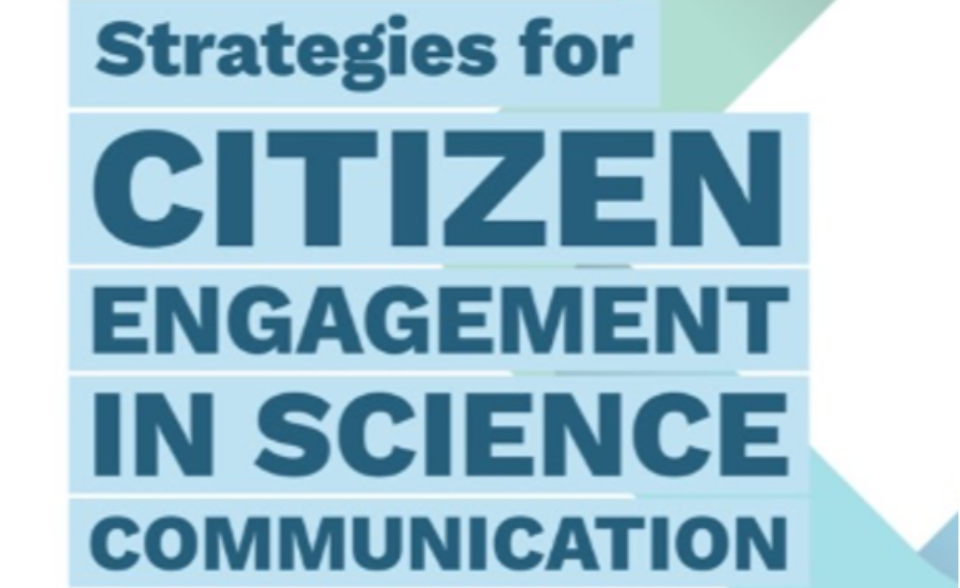
Objectives:
Engagement with science is usually presented as a dialogue or participation model in which scientists and non-scientists both benefit from listening to and learning from one another, generating mutual benefit. Citizen science is part of this larger process of engaging non-scientists in new forms of interaction with scientific research, challenging scientists and non-scientists whilst enlarging scientific knowledge and providing learning opportunities for all parties involved. These diverse interactions require innovative forms of multiway science communication.
This course aims to explore ways of communicating science to non-specialized audiences, such as policy makers, industry, general public (including students and teachers), through their engagement and participation in citizen science activities.
The course will particularly address co-creation as an effective tool to design, organise, implement and analyse the impact of public engagement in science activities. By the end of the course, students should be able to select and develop engaging initiatives to communicate scientific results and ideas.
Learning outcomes and competences:
At the end of the course, participants should be familiar with the challenges of science engagement at different levels:
Reaching several audiences, particularly those who usually don’t interact with science;
Develop an understanding of what can make written and visual communication more effective;
Selection of the best tools and channels to improve communication and dissemination;
Strategies to increase participation and facilitate engagement and dialogue with the audience.
Strategies to further strengthen engagement in science to counter disinformation and to adapt to evolving threats and manipulations.
Participants have to be present at 85% of the contact hours (this means that they can miss one half-day), and actively participate in all activities.
This course can give credits to PhD programmes at CIÊNCIAS or of programmes with partnership from CIÊNCIAS and other institutions with 6h-7h of contact hours per ECT, as a function of specific requirements. For these students additionally to the exercises done during the week the delivery of a written report done after the course is mandatory. For programmes with less hours of contact per ECT (6h/ECT, getting 6 ECTs from the course) students need to do an additional assignment (summary report). If needed 1 or 2 additional hours of contact may be added. Such report(s) are also advised for other students requesting accreditation of the course in their institutions.
Minimum formation: We require only curiosity about science communication and citizen science, and interest in learning about developing engaging science communication activities.
Directed (but not limited to) to: PhD or Master students and Postdocs in any scientific area, as well as other professionals interested in this topic
General plan
General Plan
Several examples of engagement initiatives, including citizen science projects, will be used across the course as examples on how to better engage several audiences with science and on how to improve the way science communication is performed. Both online and offline science communication will be explored through co-creation processes, using a design thinking approach. Alongside the barriers, challenges and opportunities to improve engagement in science communication will also be explored, as well as the analysis of the impact of the strategies to engage citizens in science communication.
Course contents:
1. Engagement and Participation
Explore strategies to increase citizen engagement in science communication, the importance of continued dialogue and how can these improve and maintain participation.
2. Effective Written Messages
The steps to write engaging and informative messages for different audiences.
3. The Power of Images and Sounds
How to produce engaging images, videos, infographics and audio pieces and what communication and digital tools can be used.
4. Amusement and Emotion in Communicating Science
Showing how science can be seriously communicated while having fun through humor, games, performing arts, or science fairs and other events.
Fees
Free for 1st year PhD students in Doctoral programmes at CIÊNCIAS (e.g. Biologia), Biodiversity, Genetics and Evolution (BIODIV UL; UP) and Biology and Ecology of Global Changes (BEAG UL, UA), when the course counts credits for their formation, in which case the delivery of a final report done after the course is mandatory; the course is also free for more advanced PhD students of the BIODIV programme (ULisboa or UPorto); 60 € for more advanced PhD students of CE3C; 100 € for PhD students of the PEERS network not from CE3C (CFE); 150 € for CIÊNCIAS Master students and unemployed; 200 € for BTI, BI and other PhD students with scholarship; 300 € for Professional and postdocs.
When the maximum number of students is reached, 10 vacancies will be available for non-paying 1st year PhD students mentioned above, being, by order of preference students from: 1) CE3C; 2) BIODIV (not from CE3C); 3) CIÊNCIAS (not from CE3C); 4) BEAG (not from CE3C or CIÊNCIAS).
How to Apply
Candidates should fill in the APPLICATION FORM, which will be available in this section when the call opens.
This form is strictly confidential and will only be used for the purposes of this application.
When filling the form mind to:
- FILL ALL THE MANDATORY FIELDS
- UPLOAD CV AND MOTIVATION LETTER, both mandatory.
For any doubts please contact the coordinator of the CE3C courses Inês Fragata (irfragata@ciencias.ulisboa.pt) and Cristina Luís (cmluis@ciencias.ulisboa.pt)
