
-
Date:
From 26 Oct 2026 until 30 Oct 2026
-
Deadline for Applications:
25 Sep 2026
-
Location:
Faculdade de Ciências da Universidade de Lisboa (CIÊNCIAS), Campo Grande 1749-016 Lisboa
-
Duration:
36 hours (contact hours)
-
Schedule:
09h00-12h30 and 14h00-17h30, Monday-Thursday; 09h00-13h00 and 14h00-18h00, Friday
-
Lecturer or Responsible:
Alejandra Zarzo Arias (CE3C-InWild)
-
Nº (min - max) Students:
10-18. Note: The course may open with less students if at least 3 BIODIV students enroll; this gives them additional responsibilities to take the course and should communicate immediately after the deadline for applications if they are not able to attend!
Objectives
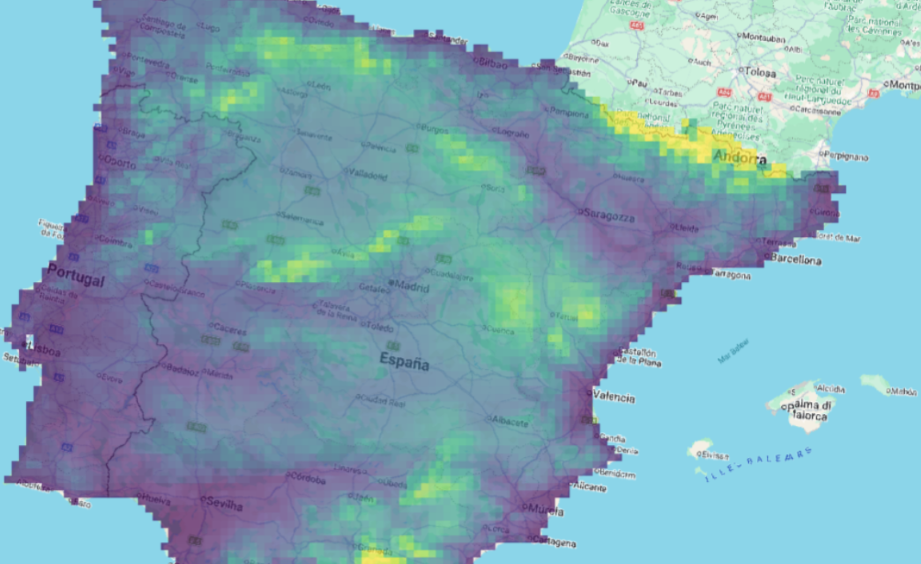
Species Distribution Models (SDMs) have become essential tools for understanding species–environment relationships and predicting species distributions across space and time. By integrating species occurrence data with environmental predictors, SDMs allow researchers to identify suitable habitats, assess limiting factors, and forecast potential distribution changes under environmental and anthropogenic pressures. This practical introductory course aims to provide participants with the basic foundations and technical skills required to develop, evaluate, and interpret SDMs for ecological research and conservation applications.
Participants have to be present at 85% of the contact hours (this means that they can miss one half-day) and actively participate in all activities.
This course can give credits to PhD programmes at CIÊNCIAS and some programmes with partnership from CIÊNCIAS and other institutions with 6h-7h of contact hours per ECT, as a function of specific requirements. For these students additionally to the exercises done during the week the delivery of a written report done after the course is mandatory. For programmes with less hours of contact per ECT (getting 6 ECTs from the course) students need to do an additional assignment (summary report). If needed 1 or 2 additional hours of contact may be added. Such report(s) are also advised for other students intending to request creditation of the course in their institutions.
Directed to: PhD or advanced MSc students, postdoc or junior researchers.
Minimal formation of students: BSc in Biology/Ecology or related areas, basic knowledge of R, QGIS.
General plan
Day 1
Introduction to SDMs concepts (species distributions, ecological niche, environmental predictors). Species occurrences download (GBIF), data cleaning, filtering and preparation.
Day 2
Morning
Importance of the environmental drivers and scale. Variable creation and preparation in QGIS. How to select proper and uncorrelated predictors.
Afternoon
Foundations of Ecological Niche Models and hands-on model building, including calibration, evaluation, and projection.
Day 3
Case studies of SDM applications and practical exercises with consensus and hierarchical models. New R packages for preventing niche truncation and how to consider biotic interactions.
Day 4
Student-focused practical sessions on data filtering and processing, environmental data creation, and initial modelling.
Day 5
Modelling with different R packages, evaluation of model performance and presentations from the students.
Fees
Free for 1st year PhD students in Doctoral programmes at CIÊNCIAS (e.g. Biologia), Biodiversity, Genetics and Evolution (BIODIV UL; UP) and Biology and Ecology of Global Changes (BEAG UL, UA), when the course counts credits for their formation, in which case the delivery of a final report done after the course is mandatory; the course is also free for more advanced PhD students of the BIODIV programme (ULisboa or UPorto); 60 € for more advanced PhD students of CE3C; 100 € for PhD students of the PEERS network not from CE3C (CFE); 150 € for CIÊNCIAS Master students and unemployed; 200 € for BTI, BI and other PhD students with scholarship; 300 € for Professional and postdocs.
When the maximum number of students is reached, 10 vacancies will be available for non-paying 1st year PhD students mentioned above, being, by order of preference students from: 1) CE3C; 2) BIODIV (not from CE3C); 3) CIÊNCIAS (not from CE3C); 4) BEAG (not from CE3C or CIÊNCIAS ).
How to Apply
Candidates should complete the APPLICATION FORM
This form is strictly confidential, and data will only be used for the purposes of this application.
When filling the form mind to:
- FILL ALL THE MANDATORY FIELDS
- UPLOAD CV AND MOTIVATION LETTER, both mandatory
For any doubts please contact the coordinator of the CE3C courses, Inês Fragata (irfragata@ciencias.ulisboa.pt), or the teacher Alejandra Zarzo Arias (azarias@ciencias.ulisboa.pt)
