From 04 May 2026 until 08 May 2026
Deadline for Applications: 10 Apr 2026
Location: Faculdade de Ciências da Universidade de Lisboa, Campo Grande 1749-016 Lisboa
From 07 Apr 2025 until 11 Apr 2025
07 Mar 2025
Faculdade de Ciências da Universidade de Lisboa, Campo Grande, 1749-016, Lisboa
36 hours (contact hours)
9:00-17:30 (includes: Fieldwork, Lab work and Lectures)
Responsibles: Ana Sofia Reboleira (CE3C-SE, CIÊNCIAS) and Roberto Keller (CE3C-NHC&S, MUHNAC); Lecturers: Patrícia Beldade (CE3C-Eco-Evo-Devo, CIÊNCIAS), Paulo Borges (CE3C-IBBC, UAçores), Paula Simões (CE3C-CoBiG2, CIÊNCIAS), Teresa Rebelo (CE3C-HuEL, CIÊNCIAS), Mário Boieiro (CE3C-IBBC, UAçores)
Departamento de Biologia Animal, Faculdade de Ciências da Universidade de Lisboa
10-20
This course was cancelled. Thank you for your interest.
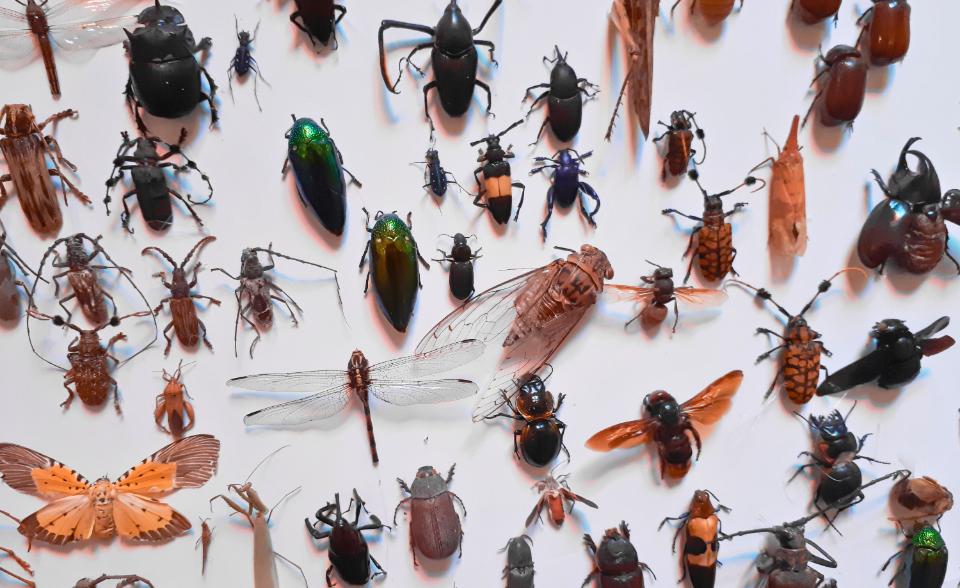
Provide a general understanding of insect diversity and decline. To capacitate students to recognize insect taxonomic groups, understand major evolutionary transitions in insect evolution, and to. identify major threats to entomofauna. The course includes several case studies of insect adaptation, and the most recent overview on insect evodevo, plasticity, ecophysiological responses and conservation under global change.
Participants need to attend 85% of the course hours (this means that they can miss one half-day), and actively participate in all activities.
This course can give credits to PhD programmes at CIÊNCIAS or of programmes with partnership from CIÊNCIAS and other institutions with 6h-7h of contact hours per ECT, as a function of specific requirements. For these students additionally to the exercises done during the week the delivery of a written report done after the course is mandatory. For programmes with less hours of contact per ECT (6h/ECT, getting 6 ECTs from the course) students need to do an additional assignment (summary report). If needed 1 or 2 additional hours of contact may be added. Such report(s) are also advised for other students requesting accreditation of the course in their institutions.
Minimal formation of students: Bachelor in Biological and Natural Sciences or related areas.
Directed to: MSc or PhD students in Biology, Environmental Sciences, Ecology or related areas, postdocs and professionals working in related topics.
09:00-09:30 Welcome session and program presentation
09:30-12:30 Introduction to Entomology
12:30-13:30 Lunch
13:30-17:30 Insect evolution, diversity, and ecology.
09:00-12:30 Insect colleting methods, preparation, and identification: terrestrial compartment
Fieldwork
12:30-13:30 Lunch
13:30-17:30 Insect colleting methods, preparation, and identification: subterranean compartment
Fieldwork
09:00-12:30 Insect colleting methods, preparation, and identification: aquatic compartment
Fieldwork
12:30-13:30 Lunch
13:30-17:30 Insect Diversity: major taxonomic groups, distinctive characters, and identification
09:00-12.30 Lectures on insect diversity and decline
12:30-13:30 Lunch
13:30-17:30 Preparation of presentation of personal project
09:00-12.30 Lectures on insect diversity and decline
12:30-13:30 Lunch
13:30-17:00 Personal project: results and discussion
17:00-17:30 Closure
Students fees
Free for 1st year PhD students in Doctoral programmes at CIÊNCIAS (e.g. Biologia), Biodiversity, Genetics and Evolution (BIODIV ULisboa; UPorto), Biology and Ecology of Global Changes (BEAG ULisboa, UAveiro) and Sustainability Science (ULisboa, several institutions), when the course counts credits for their formation, in which case the delivery of a final report done after the course is mandatory; the course is also free for more advanced PhD students of the BIODIV programme (ULisboa or UPorto); 50 € for more advanced PhD students of CE3C of other programmes; 80 € for PhD students of the PEERS network (CFE); 125 € for CIÊNCIAS Master students and unemployed; 180 € for BTI, BI and other PhD students; 250 € for Professionals and postdocs.
When the maximum number of students is reached, 10 vacancies will be available for non-paying 1st year PhD students mentioned above, being, by order of preference students from: 1) CE3C; 2) BIODIV (not from CE3C); 3) CIÊNCIAS (not from CE3C); 4) Sustainability Science (not from CE3C or CIÊNCIAS); 5) BEAG (not from CE3C or CIÊNCIAS).