
-
Date:
23 Apr 2026
-
Location:
Room 2.2.21 - Faculty of Sciences of the University of Lisbon & Online
-
Schedule:
16h00 (Lisbon time), 15h00 (Azores time)
-
Lecturer or Responsible:
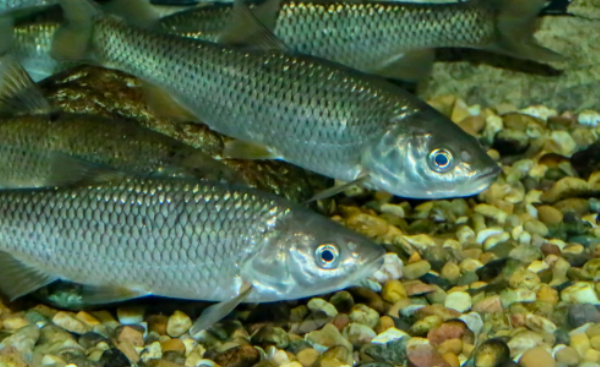
Hybridization seems widespread across many taxa. At the genomic level, hybridization has a dual role: it can act as a source of genetic variation fueling adaptation, but it can also result in reduced fitness due to genetic incompatibilities. I will illustrate how population genomics data can be useful to detect hybridization and reconstruct the evolutionary history of species. I will provide an overview of the research we do at the Evolutionary Genomics and Bioinformatics group, focusing on endemic Iberian freshwater fish (chubs of genus Squalius). I will discuss how species with current non-overlapping and allopatric distributions show evidence of past introgression, including cases of recent and ancient hybridization. We raise the hypothesis that ancient hybridization allowed admixed lineages to exclude and/or assimilate parental species, promoting further hybridization with other species. I will contextualize these results in terms of predictions from simulations under models of speciation in the face of gene flow.
Online access* • LINK
*To access the meeting in the app without using the link, use the meeting ID 329 691 886 618 767 and acess code u9eJ6Ld3

Vítor Sousa (Evolutionary Genomics and Bioinformatics)