
-
Date:
26 Feb 2026
-
Location:
Room 2.2.14 - Faculty of Sciences of the University of Lisbon & Online
-
Schedule:
16h00 (Lisbon time), 15h00 (Azores time)
-
Lecturer or Responsible:
Carlos Gravato (Environmental Quality and Human Health)
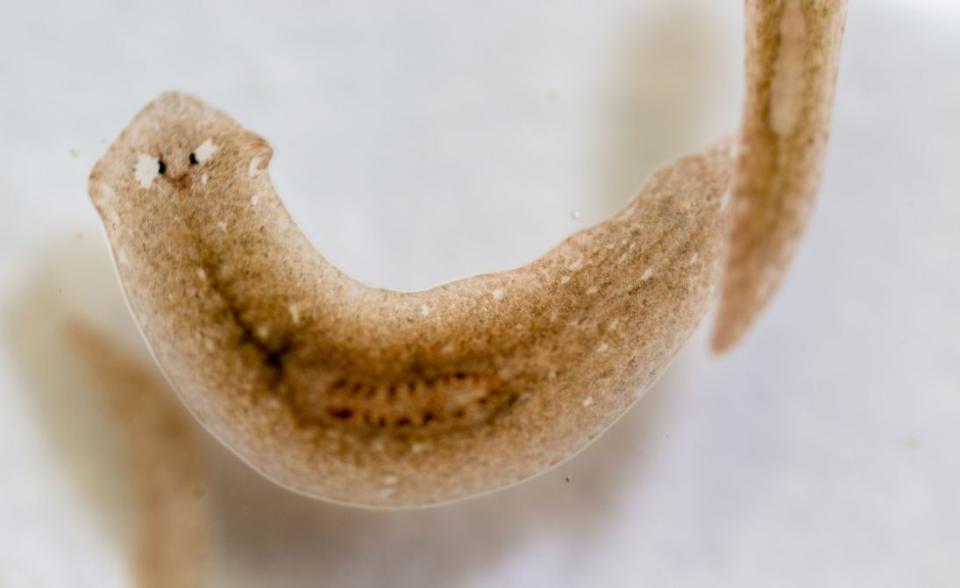
Despite ongoing research into the ageing process, studying simpler animals, such as planarians, can be both advantageous and crucial for understanding the physiological pathways involved and their interactions, as well as the compensatory processes that can be used to overcome oxidative stress. The study of Girardia tigrina is highly significant due to its remarkable regenerative capacity, lack of senescence signs, and its frequent classification as an immortal species. This research aimed to identify and test a set of biomarkers to assess the ageing process in planarians, and to establish potential interactions between various physiological pathways. The focus was on aerobic and anaerobic energy production, enzymatic and non-enzymatic antioxidant capacity, detoxification activity, oxidative damage, and neuromuscular activity. The results obtained allow for the classification of four life stages, with a senior state of oxidative stress associated with decreased antioxidant capacity and aerobic energy production. Furthermore, phenotypic changes were observed in end-of-life planarians, including the formation of neoplasms and profound mutations. This supports the hypothesis that they exhibit signs of ageing over time, contrasting with the idea of immortality.
Online access* • LINK
* To access the meeting in the app without using the link, use the meeting ID 355 491 266 776 63 and access code dy9V2E4f

Carlos Gravato
Environmental Quality and Human Health