
-
Date:
From 18 Jan 2027 until 22 Jan 2027
-
Deadline for Applications:
18 Dec 2026
-
Location:
Faculdade de Ciências da Universidade de Lisboa (CIÊNCIAS), Campo Grande 1749-016 Lisboa
-
Duration:
36 hours (contact hours)
-
Schedule:
09h00-12h30 and 14h00-17h30, Monday-Thursday; 09h00-13h00 and 14h00-18h00, Friday
-
Lecturer or Responsible:
Maria Alexandra Oliveira (CE3C-SystEco, CIÊNCIAS), Adriana Príncipe Silva (CE3C-urbanE, CIÊNCIAS), João Nuno Silva (INESC-ID/IST), Pedro Pinho (CE3C-UrbanE, CIÊNCIAS), Inês Domingues (CE3C-SystEco, CIÊNCIAS), Mariana Ramos (CE3C-SystEco, CIÊNCIAS)
-
Nº (min - max) Students:
10-20. Note: The course may open with less students if at least 3 BIODIV students enroll; this gives them additional responsibilities to take the course and should communicate immediately after the deadline for applications if they are not able to attend!
Objectives:
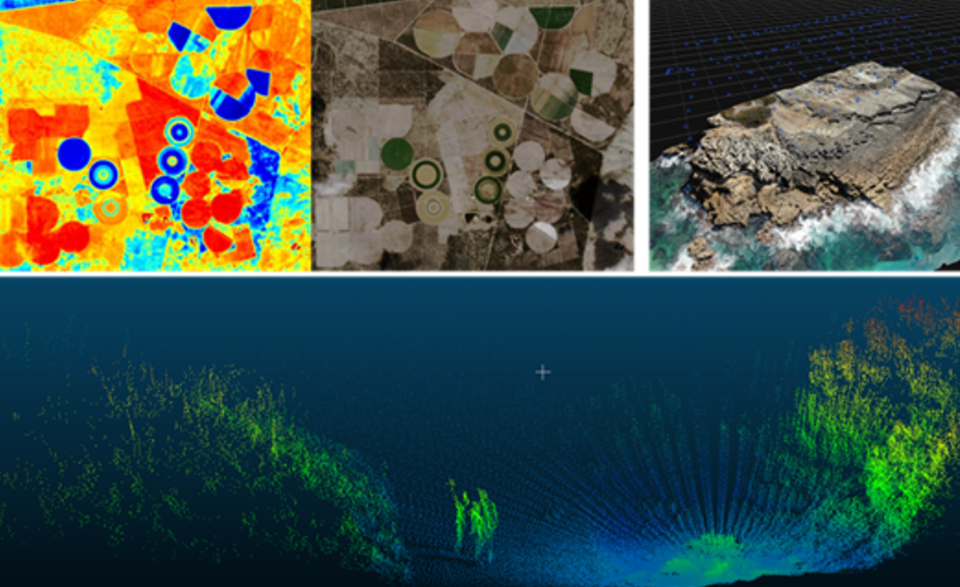
Remote sensing is becoming an invaluable tool extending data collection, both in space and time, to complement classical sampling strategies for both earth and biological sciences. This advanced course aims to provide access and tools to remote sensing data acquisition and processing for different applications using satellite, drone and terrestrial multispectral imagery and LiDAR, and focusing on characterizing the vegetation and landscape, and their changes in time.
Participants have to be present at 85% of the contact hours (this means that they can miss one half-day), and actively participate in all activities.
This course can give credits to PhD programmes at CIÊNCIAS or of programmes with partnership from CIÊNCIAS and other institutions with 6h-7h of contact hours per ECT, as a function of specific requirements. For these students, additionally to the exercises done during the week, the delivery of a written report, done after the course, is mandatory. For programmes with less hours of contact per ECT (6h/ECT, getting 6 ECTs from the course) students need to do an additional assignment (summary report). If needed 1 or 2 additional hours of contact may be added. Such report(s) are also advised for other students requesting creditation of the course in their institutions.
Directed to: MSc or PhD students in Biology, Geology, Environmental Sciences, Ecology or related areas, postdocs and professionals working in related topics.
Minimal formation of students: Bachelor’s degree in Earth Sciences, Biology, Natural Science, or related areas. Basic programming skills (python/R) and knowledge on geospatial data processing.
General plan
Day 1: theoretical introductions concerning remote sensing sensors (active and passive) and platform (satellite, drone, terrestrial). Data access platforms: available satellites and products, Remote Sensing data visualization using web portals, data download and visualization.
Day 2: theoretical introduction and practical classes on programming using pandas (Google Earth Engine), R and/or python to access, download and process remote sensing data.
Day 3: Morning: use cases showcasing work involving researchers from the cE3c that used remote sensing data. Afternoon: Practical session (eventually some field work nearby for data collection using terrestrial LiDAR, NDVI and multispectral cameras).
Day 4: Ph.D. students’ presentations and discussions to identify datasets that can support their Ph. D. plans. Processing field data collected previously.
Day 5: Processing LiDAR data using R to characterize the vegetation structure.
Fees
Free for 1st year PhD students in Doctoral programmes at FCUL (e.g. Biologia), Biodiversity, Genetics and Evolution (BIODIV UL; UP) and Biology and Ecology of Global Changes (BEAG UL, UA), when the course counts credits for their formation, in which case the delivery of a final report done after the course is mandatory; the course is also free for more advanced PhD students of the BIODIV programme (ULisboa or UPorto); 60 € for more advanced PhD students of CE3C; 100 € for PhD students of the PEERS network not from CE3C (CFE); 150 € for FCUL Master students and unemployed; 200 € for BTI, BI and other PhD students with scholarship; 300 € for Professional and postdocs.
When the maximum number of students is reached, 10 vacancies will be available for non-paying 1st year PhD students mentioned above, being, by order of preference students from: 1) CE3C; 2) BIODIV (not from CE3C); 3) FCUL (not from CE3C); 4) BEAG (not from CE3C or FCUL).
How to Apply
Candidates should fill in the APPLICATION FORM, which will be available in this section when the call opens.
This form is strictly confidential and will only be used for the purposes of this application.
When filling the form mind to:
- FILL ALL THE MANDATORY FIELDS
- UPLOAD CV AND MOTIVATION LETTER, both mandatory.
For any doubts please contact the coordinator of the CE3C courses Inês Fragata (irfragata@ciencias.ulisboa.pt) and the teacher Maria Alexandra Oliveira (maoliveira@ciencias.ulisboa.pt).
