
-
Date:
From 29 Mar 2027 until 02 Apr 2027
-
Deadline for Applications:
05 Feb 2027
-
Location:
Faculdade de Ciências da Universidade de Lisboa (CIÊNCIAS), Campo Grande 1749-016 Lisboa
-
Duration:
36 hours (contact hours)
-
Schedule:
Monday - Wednesday 09:00 – 18:00; Thursday and Friday 09:00 – 18:30
-
Lecturer or Responsible:
Pedro Cardoso (CE3C-MLE, CHANGE, CIÊNCIAS), Filipa Soares (CIBIO, ISA), Luis Borda de Água (iDiv, CEABN), Nuria Macias (ULL, Spain), Alice Nunes (CE3C-ECOR, CHANGE, CIÊNCIAS), Joana Ribeiro (CIBIO, ISA)
-
Nº (min - max) Students:
10-16. The course may open with less students when at least 3 BIODIV students enroll; this gives them additional responsibilities to take the course and should communicate immediately after the deadline for applications if they are not able to attend!
Objectives:
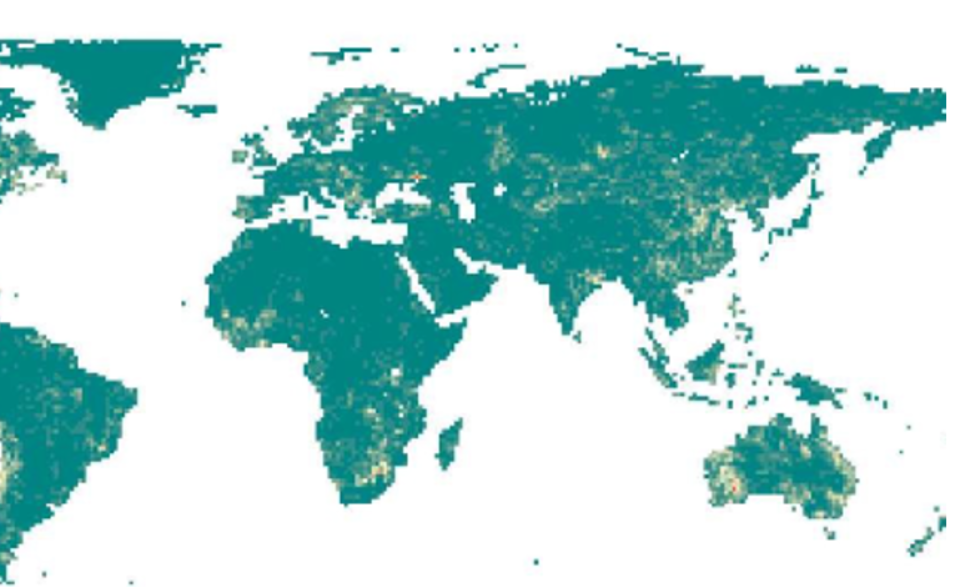
This hands-on course, limited to a small number of participants, aims at those who are looking for basic macroecology theory and statistics training and wish to get familiar with some of the potential uses of multiple advanced methods. This course will incorporate theoretical and practical classes, where the participants will acquire experience in different software packages and how to use the plethora of options available for large spatial and temporal scale analyses.
Participants have to be present at 85% of the contact hours (this means that they can miss one half-day) and actively participate in all activities.
This course can give credits to PhD programmes at CIÊNCIAS or of programmes with partnership from CIÊNCIAS and other institutions with 6h-7h of contact hours per ECT, as a function of specific requirements. For these students additionally to the exercises done during the week the delivery of a written report done after the course is mandatory. For programmes with less hours of contact per ECT (6h/ECT, getting 6 ECTs from the course) students need to do an additional assignment (summary report). If needed 1 or 2 additional hours of contact may be added. Such report(s) are also advised for other students requesting creditation of the course in their institutions.
Directed to: PhD or advanced MSc students, postdoc or junior researchers
Minimal formation of students: BSc in Biology/Ecology or related areas, basic+ knowledge of R language
General plan
Day 1, morning - T01: Introduction to Macroecology
09.00-10.00 - Introduction to macroecology
10.00-11.00 - Fundamental patterns in macroecology
11.00-11.30 - Coffee break
11.30-13.00 - Scaling in ecology
13.00-14.00 - Lunch
Day 1, afternoon - P01: Data in macroecology
14.00-15.00 - Distribution databases
15.00-16.00 - Data acquisition and cleaning (part 1)
16.00-16.30 - Coffee break
16.30-18.00 - Data acquisition and cleaning (part 2)
Day 2, morning - T02: Tools and methods in macroecology
09.00-10.00 - Basics of taxonomic diversity
10.00-11.00 - Spatial statistics
11.00-11.30 - Coffee break
11.30-13.00 - Null models
13.00-14.00 - Lunch
Day 2, afternoon - P02: Statistical methods in practice
14.00-15.00 - Case study integration for spatial analysis
15.00-16.00 - Spatial data analysis (part 1)
16.00-16.30 - Coffee break
16.30-18.00 - Spatial data analysis (part 2)
Day 3, morning - T03: Concepts and applications in phylogenetic diversity (PD)
09.00-10.00 - Diversification rates and community assembly
10.00-11.00 - Understanding phylogenetic signal in ecological data
11.00-11.30 - Coffee break
11.30-13.00 - Phylogenetic diversity metrics
13.00-14.00 - Lunch
Day 3, afternoon - P03: Phylogenetic diversity in practice
14.00-15.00 - Building trees for community ecology
15.00-16.00 - Phylogenetic data analysis (part 1)
16.00-16.30 - Coffee break
16.30-18.00 - Phylogenetic data analysis (part 2)
Day 4, morning - T04: Concepts and applications in functional diversity (FD)
09.00-10.00 - Definition of functional traits
10.00-11.00 - Community assembly through functional traits
11.00-11.30 - Coffee break
11.30-13.00 - Functional diversity metrics
13.00-14.00 - Lunch
Day 4, afternoon - P04: Functional diversity in practice
14.00-15.00 - Trait databases
15.00-16.00 - Functional data analysis (part 1)
16.00-16.30 - Coffee break
16.30-18.30 - Functional data analysis (part 2)
Day 5, morning - T05: Concepts and applications in global conservation
09.00-10.00 - Species conservation prioritization
10.00-11.00 - The macroecology of invasive species
11.00-11.30 - Coffee break
11.30-13.00 - Ecosystem services at global scales
13.00-14.00 - Lunch
Day 5, afternoon - P05: Conservation in practice
14.00-15.00 - Threat databases
15.00-16.00 - Conservation analysis (part 1)
16.00-16.30 - Coffee break
16.30-18.30 - Conservation analysis (part 2)
Fees
Free for 1st year PhD students in Doctoral programmes at CIÊNCIAS (e.g. Biologia), Biodiversity, Genetics and Evolution (BIODIV UL; UP) and Biology and Ecology of Global Changes (BEAG UL, UA), when the course counts credits for their formation, in which case the delivery of a final report done after the course is mandatory; the course is also free for more advanced PhD students of the BIODIV programme (ULisboa or UPorto); 60 € for more advanced PhD students of CE3C; 100 € for PhD students of the PEERS network not from CE3C (CFE); 150 € for CIÊNCIAS Master students and unemployed; 200 € for BTI, BI and other PhD students with scholarship; 300 € for Professional and postdocs.
When the maximum number of students is reached, 10 vacancies will be available for non-paying 1st year PhD students mentioned above, being, by order of preference students from: 1) CE3C; 2) BIODIV (not from CE3C); 3) CIÊNCIAS (not from CE3C); 4) BEAG (not from CE3C or CIÊNCIAS).
How to Apply
Candidates should fill in the APPLICATION FORM, which will be available in this section when the call opens.
This form is strictly confidential and will only be used for the purposes of this application.
When filling the form mind to:
- FILL ALL THE MANDATORY FIELDS
- UPLOAD CV AND MOTIVATION LETTER, both mandatory.
For any doubts please contact the coordinator of the CE3C courses Inês Fragata (irfragata@ ciencias.ulisboa.pt) and the teacher Pedro Cardoso (pmcardoso@ciencias.ulisboa.pt)
