
-
Date:
18 Jun 2026
-
Location:
Room 2.2.15 - Faculty of Sciences of the University of Lisbon & Online
-
Schedule:
16h00 (Lisbon time), 15h00 (Azores time)
-
Lecturer or Responsible:
Marta Antunes
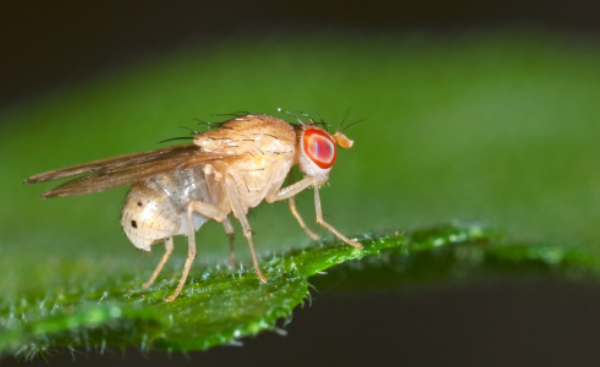
Increasing temperatures are having a strong negative impact on biodiversity, particularly ectotherms. This study investigates adaptation to increasing temperatures in populations of the ectothermic model Drosophila subobscura derived from contrasting European latitudes. Thermal adaptation was analyzed in life-history traits (generations 22 and 39) and genome-wide gene expression (generations 9 and 23). Results showed slow adaptation, as phenotypic changes only appeared at generation 39 in low-latitude populations. In contrast, a widespread transcriptomic response preceded life-history changes. High-latitude populations exhibited lower initial plasticity and greater evolutionary changes at the gene expression level whereas low-latitude presented the opposite pattern, highlighting an interplay between plasticity and selection. Gene expression dynamics revealed complex, non-directional trajectories possibly associated with the dynamic thermal environment in which populations evolved. This study underscores the complexity of evolutionary responses and the importance of incorporating diverse mechanisms and multiple populations into predictive climate change models.
Online access* • LINK
*To access the meeting in the app without using the link, use the meeting ID 366 534 223 689 691 and acess code Uo7ZN7EZ
Marta Antunes (Local Adaptation in Drosophila)